Creating truly engaging games in Roblox Studio means going beyond static environments. For many busy gamers, finding time to learn complex development skills can be a challenge. This comprehensive guide on how to make an interactive NPC in Roblox Studio is designed specifically for you. We understand that balancing work, family, and your passion for gaming means every minute counts. You want clear, actionable steps that lead to tangible results without wading through endless jargon or outdated tutorials. Imagine populating your world with characters that chat, offer quests, react to players, and bring your virtual spaces to life. This article cuts through the complexity, offering practical solutions and proven techniques to integrate dynamic Non-Player Characters into your Roblox games. We'll cover everything from basic dialogue systems to advanced scripting for quest-givers and reactive AI, ensuring your creations stand out. Dive in to elevate your game development skills and create more immersive, social, and replayable experiences that captivate players and reflect the growing trend of interactive storytelling in games. Discover how to transform your vision into reality, making your Roblox world truly your own.
How do I begin creating a talking NPC in Roblox Studio?
To start creating a talking NPC in Roblox Studio, first, insert a character model (like an R15 dummy) into your workspace. Add a ProximityPrompt or ClickDetector to a part of the NPC, such as its HumanoidRootPart, to detect player interaction. Then, inside the NPC model, insert a Script. This script will contain the logic to display dialogue, either by setting the Dialog property of the Humanoid or by creating a custom ScreenGui with text boxes. Connect the prompt's Triggered event to a function that cycles through your dialogue lines, making your NPC speak when a player gets close or clicks it.
What scripting language is used for interactive NPCs in Roblox Studio?
Roblox Studio primarily uses Lua, or specifically, Luau, which is a fast, lightweight scripting language optimized for Roblox. All the logic for your interactive NPCs, from dialogue systems to pathfinding and quest mechanics, will be written in Luau. It's a relatively easy language to learn, making it accessible for developers of all skill levels to create complex and engaging character behaviors. Understanding Luau fundamentals, including variables, functions, events, and tables, is essential for crafting dynamic NPCs.
How can I make an NPC give items or rewards in Roblox?
To make an NPC give items or rewards, your server script should handle the inventory management. When a player completes a quest or reaches a certain point in dialogue, the NPC's script can check for completion. If conditions are met, the script will create a new Tool instance (or another item type) and parent it to the player's Backpack. For currency, simply update the player's leaderstat value, like "Cash" or "Coins". Ensure these changes are handled on the server to prevent client-side exploits and maintain game integrity, providing a fair and rewarding experience for players.
Is it possible for NPCs to follow a player or run away from them?
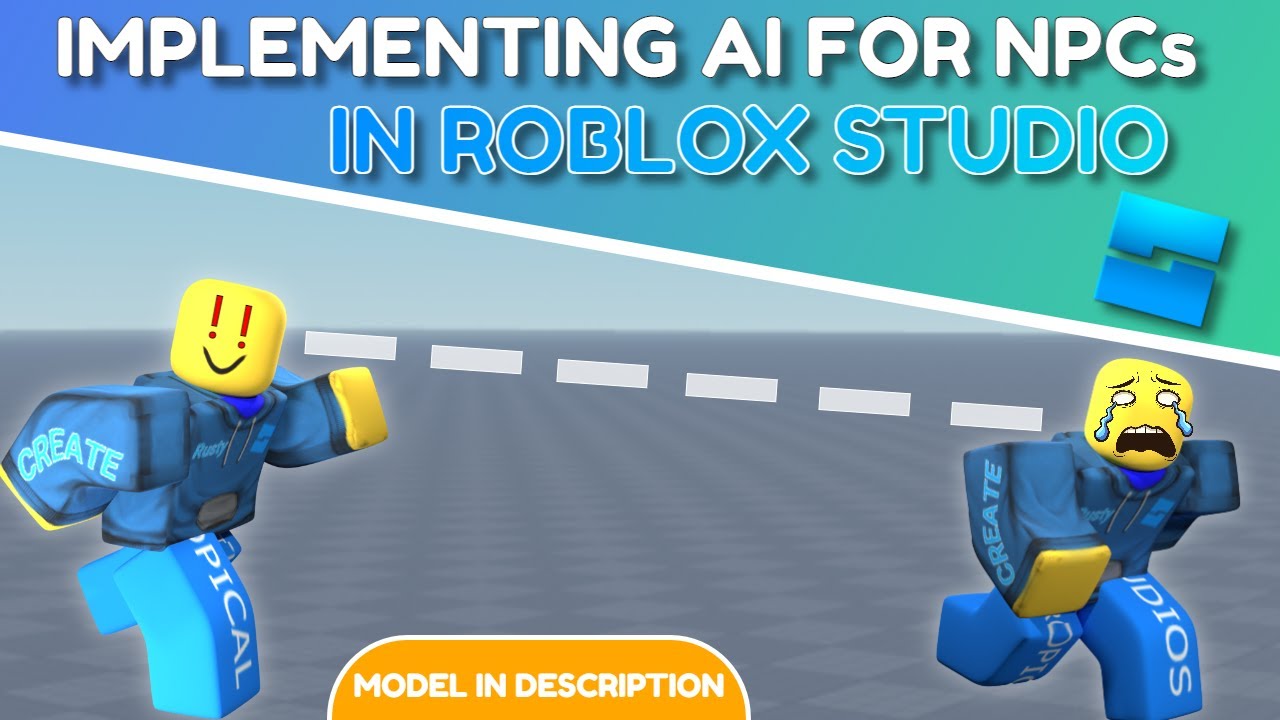
Yes, NPCs can be scripted to follow players or run away using Roblox's PathfindingService. To make an NPC follow, you would continuously calculate a path from the NPC to the player's current position and command the NPC's Humanoid to MoveTo() the next waypoint. To make an NPC run away, you'd calculate a path in the opposite direction or to a safe, predefined location when a player gets too close. Implementing a cool-down or detection radius helps prevent constant path recalculations, optimizing performance, particularly for the busy gamer balancing many game elements.
What is the best practice for storing NPC dialogue and quest data?
For storing NPC dialogue and quest data, the best practice is to use module scripts or tables within your server scripts. Module scripts allow you to organize dialogue lines, branching options, quest objectives, and rewards in a structured, easy-to-manage format, separate from the main NPC logic. This approach promotes clean code, makes it simple to add or modify content, and allows multiple NPCs to share dialogue elements or quest structures without duplicating code, saving development time for creators who value efficiency.
How do I ensure my interactive NPCs don't cause lag in my Roblox game?
To prevent lag, optimize your NPC scripts by minimizing constant while true do loops; instead, use event-based programming for interactions. Limit complex physics calculations and visual effects where possible. For pathfinding, only compute paths when necessary, and utilize Path.Blocked events for recalculations. Consider simplifying NPC models to reduce rendering overhead. Distribute processing between client and server for certain tasks, letting the client handle visual updates. Regular testing and using Roblox's Developer Console performance tab will help identify and address any lag sources, ensuring smooth gameplay.
Can I make an NPC react to specific items a player is holding?
Yes, you can make an NPC react to specific items a player is holding. Your NPC's server script would need to monitor the player's Backpack or Character for changes (e.g., when Player.Character.ChildAdded or ChildRemoved fires, or periodically check the Player.Character:FindFirstChildOfClass("Tool")). When the player equips an item, the script can check the item's Name or other properties. If it matches a predefined item, the NPC can then trigger unique dialogue, offer a special quest, or perform a specific animation, adding another layer of depth and interaction to your Roblox game world.
Gamers averaging around 36 years old, often balancing jobs and family, value deep, engaging experiences but have limited time for development. They want their gaming worlds to feel alive, not just a series of static assets. How to make an interactive NPC in Roblox Studio isn't just about scripting; it's about breathing life into your creations, making your game world a place where players truly want to unwind and connect. We've all played games where NPCs were glorified signposts, but the real magic happens when characters feel like part of the world, offering quests, sharing lore, or even just reacting to your presence. This guide will walk you through the essential steps to transform your static NPCs into dynamic, interactive personalities, helping you build skills without sacrificing precious gaming time. We'll tackle common pain points, like complex scripting or performance worries, and show you how to craft compelling interactions that keep players engaged, just like the 87% of US gamers who regularly dive into virtual worlds, often for 10+ hours a week. It's time to elevate your Roblox creations and give your players an unforgettable experience.
What are Interactive NPCs and Why Do They Matter in Roblox?
Interactive NPCs, or Non-Player Characters, are digital characters within your Roblox game that can react to players, engage in dialogue, give quests, or even follow simple commands. They matter immensely because they transform a static environment into a dynamic, living world. For busy gamers seeking relaxation and social connection, interactive NPCs offer depth, storytelling, and replayability that simple obstacle courses cannot. They drive narratives, provide challenges, and make the virtual space feel more populated and authentic, enhancing the overall player experience and encouraging longer play sessions.
What are the Core Components Needed to Create an Interactive NPC?
Building an interactive NPC in Roblox Studio typically requires a few core components. First, you need a character model, often a Rigged R15 or R6 avatar, acting as your NPC's physical representation. Second, you'll need a way to detect player interaction, usually through proximity prompts or click detectors attached to the NPC. Third, a robust dialogue system is crucial, often managed via a StringValue for the current dialogue and a RemoteEvent for client-server communication. Finally, scripting is at the heart of it all, handling responses, branching conversations, and any other behaviors like movement or quest assignments. These elements work together to bring your character to life.
How Do I Script Basic Dialogue for a Roblox NPC?
Scripting basic dialogue involves a few steps. Start by placing a Script inside your NPC model. Inside this script, you'll detect when a player triggers an interaction, such as clicking a ClickDetector or activating a ProximityPrompt. When triggered, the script will then display dialogue to the player. A common method is to use a Dialog object or a custom ScreenGui to present text. For simplicity, you can set the Dialog property on the NPC's Humanoid to automatically handle speech bubbles. You'll define an array of dialogue lines and cycle through them with each interaction, making your NPC speak one line at a time. This foundational step is key to creating engaging conversations.
Can NPCs Respond to Player Choices and Branch Conversations?
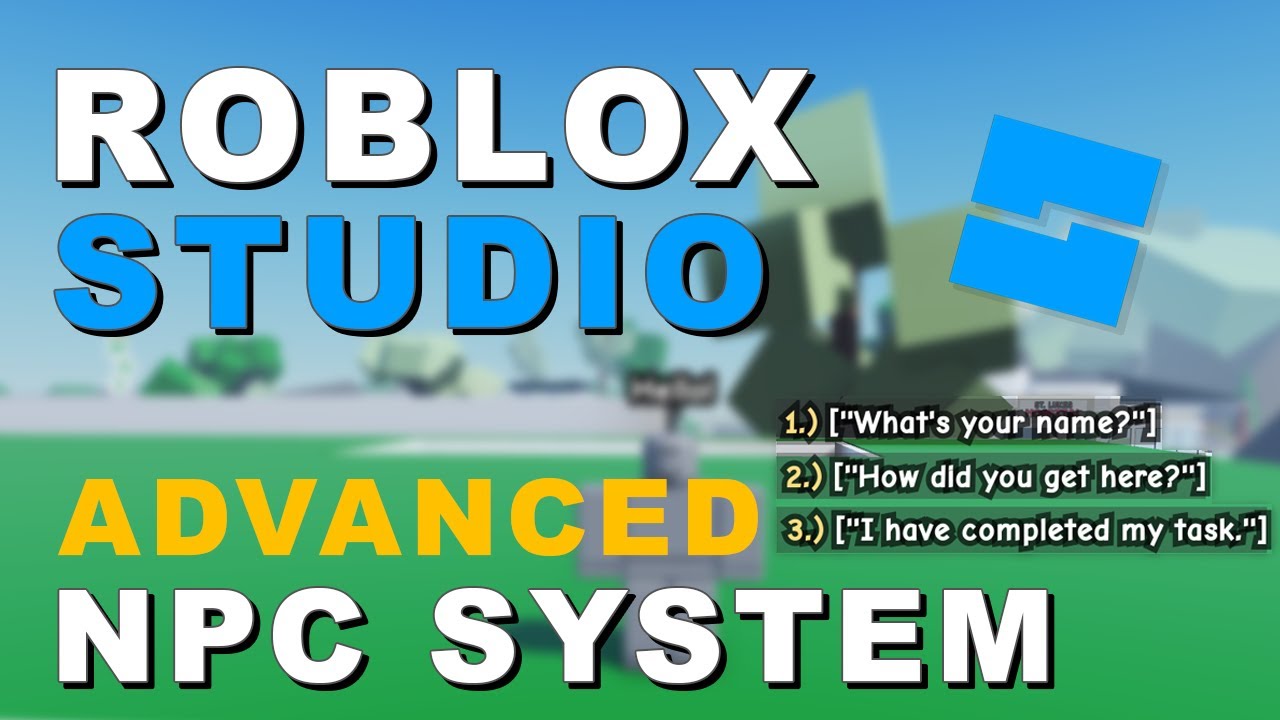
Absolutely, enabling NPCs to respond to player choices and branch conversations significantly deepens immersion. Instead of linear dialogue, you can present players with multiple options. This is often achieved by dynamically creating TextButton elements within a ScreenGui that appear after an NPC speaks. When a player clicks a choice, a RemoteEvent can send that selection back to the server script. The server then processes the choice, updating the NPC's dialogue path, triggering different outcomes, or even starting a quest. This mechanic is vital for creating robust storytelling and allowing players to feel like their decisions genuinely influence the game world, a key aspect for the 60% of gamers who prioritize social and skill-building play.
How Can I Make an NPC Move or Follow a Path in Roblox Studio?
Making an NPC move or follow a path involves using Roblox's built-in pathfinding service. You'll typically get the PathfindingService in your server script. To make an NPC move to a specific target, you create a path using PathfindingService:CreatePath(), then Path:ComputeAsync() to calculate the route. Once the path is ready, you can iterate through the Path.Waypoints and instruct the NPC's Humanoid to MoveTo() each waypoint in sequence. This allows for dynamic movement, whether it's patrolling a specific area, following a player, or leading them to a quest objective, making your world feel much more alive. Remember to handle path calculation failures gracefully to avoid errors.
What are Common Pitfalls When Developing Interactive NPCs and How to Avoid Them?
Several common pitfalls can trip up developers making interactive NPCs. One is performance issues from overly complex scripts or inefficient pathfinding computations, especially with many NPCs. Avoid this by optimizing code, caching paths where possible, and using task.wait() to throttle loops. Another pitfall is poor client-server synchronization, leading to desync or unresponsive interactions; use RemoteEvents and RemoteFunctions correctly for communication. Forgetting to clean up UI elements or connections can also cause memory leaks. Always disconnect RBXScriptConnections and destroy UI components when no longer needed. Finally, unclear dialogue logic can lead to confusing player experiences, so meticulously plan your conversation trees.
How Can Interactive NPCs Drive Quests and Game Progression?
Interactive NPCs are pivotal for driving quests and game progression. An NPC can initiate a quest by offering a ProximityPrompt or ClickDetector interaction that presents a quest dialogue. Upon acceptance, the NPC's script can update the player's data (e.g., a leaderstat or Folder in Player.Data) to mark the quest as active and define its objectives. These objectives might involve collecting items, defeating enemies, or visiting locations. Once the player completes the objective, they return to the NPC, who then validates completion, rewards the player (with cash, items, or experience), and potentially offers the next quest in a chain. This creates a compelling loop, keeping players engaged and providing clear goals within the game.
Tips for Optimizing NPC Performance in Roblox Studio?
Optimizing NPC performance is crucial for a smooth game, especially for players on mobile or older PCs. Firstly, minimize the number of while true do loops in NPC scripts; use event-driven programming instead. Secondly, simplify complex character models; fewer parts and triangles mean less render time. Third, optimize pathfinding by only computing paths when necessary and using Path.Blocked events to recompute only when an obstacle appears, rather than constantly. Fourth, offload visual effects and heavy UI updates to the client using RemoteEvents to avoid server strain. Lastly, consider using client-side prediction for minor visual NPC movements to reduce server load and improve responsiveness. These adjustments help ensure a fun experience for everyone, regardless of hardware.
So there you have it, a comprehensive guide to bringing your Roblox worlds to life with interactive NPCs. From basic dialogue to complex questlines and optimized movement, you now have the tools to create characters that truly engage your players. Remember, the goal is to build immersive experiences that offer relaxation and skill-building, even for those busy US gamers juggling life's demands. By focusing on clear interactions and efficient scripting, you can craft memorable characters that keep players returning for more. What's your biggest gaming challenge when creating interactive experiences? Comment below and let's discuss!
What is the easiest way to make an NPC talk in Roblox?
The easiest method is to use a Dialog object instance within your NPC's Humanoid to manage simple conversation bubbles without complex UI scripting. Attach a ProximityPrompt or ClickDetector to trigger the dialogue.
How do I make an NPC detect a player in Roblox?
You can use Magnitude checks to calculate the distance between the NPC and players, or attach a ProximityPrompt to the NPC which automatically detects when a player is within range and offers an interaction prompt.
Can I use pre-made NPC scripts from the Roblox Marketplace?
Yes, the Roblox Marketplace (Toolbox) offers many community-created NPC models and scripts. While they can be a great starting point, always review and understand the code to ensure it's secure, efficient, and fits your game's specific needs before implementing.
What's the difference between a LocalScript and a Server Script for NPCs?
A LocalScript runs only on the player's client and is best for visual effects or client-side UI. A Server Script runs on the Roblox server and is essential for handling core NPC logic like dialogue progression, quest states, and physics-based movement, ensuring consistency for all players.
How do I make an NPC a quest giver with multiple quests?
To make an NPC offer multiple quests, you would typically store the quest data in a structured table or module script. When a player interacts, the NPC checks the player's current quest status and dynamically presents available quests, updating their progress in a server-side DataStore or leaderstats as they complete objectives.
Scripting dynamic dialogue systems in Roblox Studio. Implementing player choices and branching conversations for NPCs. Integrating pathfinding and basic AI for character movement. Creating quest-giving NPCs with objective tracking. Handling player interactions and triggering NPC responses. Debugging common NPC scripting issues. Optimizing interactive NPC performance for smoother gameplay. Elevating game immersion through responsive characters.
35


How To Make NPC In Roblox Studio YouTube . 2026 How To Make A Working NPC Talk Animate In Roblox Studio 2026 Hqdefault . How To Make Walking NPC Roblox Studio YouTube . How To Make Animated NPC Roblox Studio Tutorial YouTube . How To Make NPC Interaction System In Roblox Studio Advanced Tutorial


How To Make And Animate An Npc In Roblox Studio YouTube Hqdefault . Create An NPC In ROBLOX Studio Let S Do Tech Roblox Studio . How To Make Custom NPC Animations In Roblox Studio 2025 YouTube . Roblox Studio How To Make Moving Npc Tutorial YouTube . How To IMPLEMENT AI Into NPCs In Roblox Studio YouTube



How To Make An NPC Play An Animation Roblox Studio YouTube . HOW TO ADD A ANIMATON INTO A NPC Roblox Studio Tutorial YouTube . How To Make A NPC Dialog In Roblox Studio YouTube . How To Make Npc Follow Us ROBLOX STUDIO TUTORIAL YouTube . Roblox Studio How To Make A NPC Pathfinding System YouTube


How To Make An NPC Dance In Roblox Studio Roblox Scripting Tutorial . How To Make NPCs In Roblox Studio YouTube . How To Create A Talkable NPC In Roblox Studio Beginner Friendly YouTube . NEW How To Make NPCs Walk On Roblox Studio In 2026 YouTube . ROBLOX STUDIO How To Make A Quest System NPC Interactive

ROBLOX STUDIO How To Make A Following NPC YouTube . How To Make An Enemy NPC AI In Roblox Roblox Studio Scripting Hqdefault . How To Make NPC LOOKING AT THE PLAYER In Roblox Studio Roblox Studio . How To Make An NPC Talk In Roblox Studio YouTube . How To Make NPC AI In Roblox Studio YouTube




How To Add ANIMATIONS To A NPC Roblox Studio Tutorial YouTube . How To Make NPCS In Roblox Studio YouTube . ROBLOX Studio How To Customize An NPC YouTube . How To Make An Enemy NPC In Roblox Studio YouTube . How To Make An Enemy NPC In Roblox Studio 2026 YouTube


How To Make NPC S Talk Roblox Studio 2023 Tutorial YouTube . How To Make An NPC System In Roblox Studio YouTube . How To Do A Talking Npc In Roblox Studio YouTube . NPC Move To FULL TUTORIAL Roblox Studio YouTube . How To Make NPCS In Roblox Studio YouTube